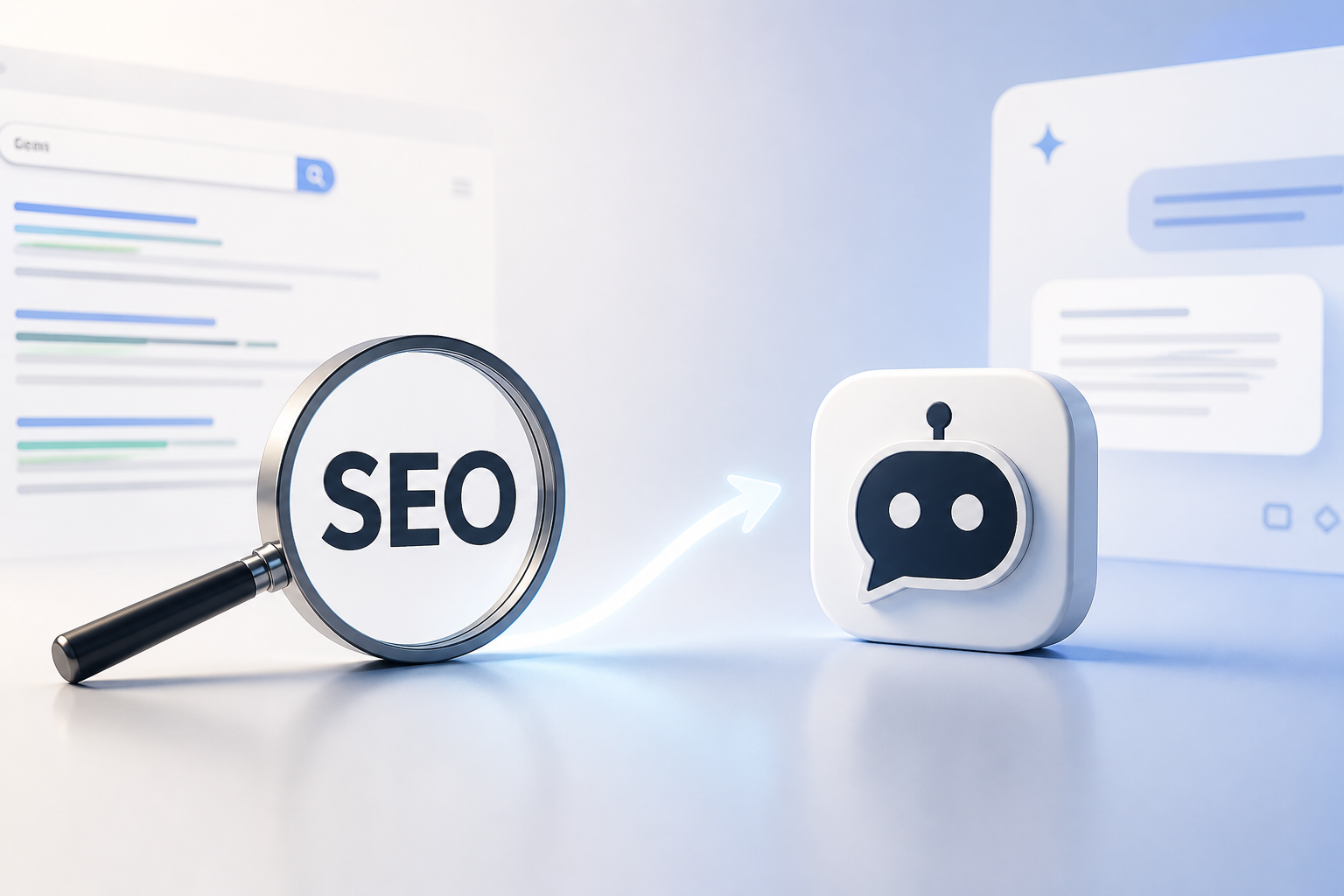

Have you tried searching for something on ChatGPT or Perplexity recently? Notice how it doesn’t just show a list of links—it scans the web and gives you a clear, conversational answer. This shift is exactly why GEO vs SEO matters in 2026.
If your business doesn’t appear in AI-generated responses, you risk losing visibility with a massive portion of your audience. In fact, experts predict that by 2026, up to 60% of searches will be “zero-click”—where users get complete answers without ever visiting a website.
Welcome to the era of Generative Engine Optimisation, or GEO.

GEO vs SEO: Why SEO is Evolving in 2026
For years, we all played the same SEO game: stuff some keywords into a blog post, build some backlinks, and pray for that page-one Google ranking. But the rules have fundamentally changed.
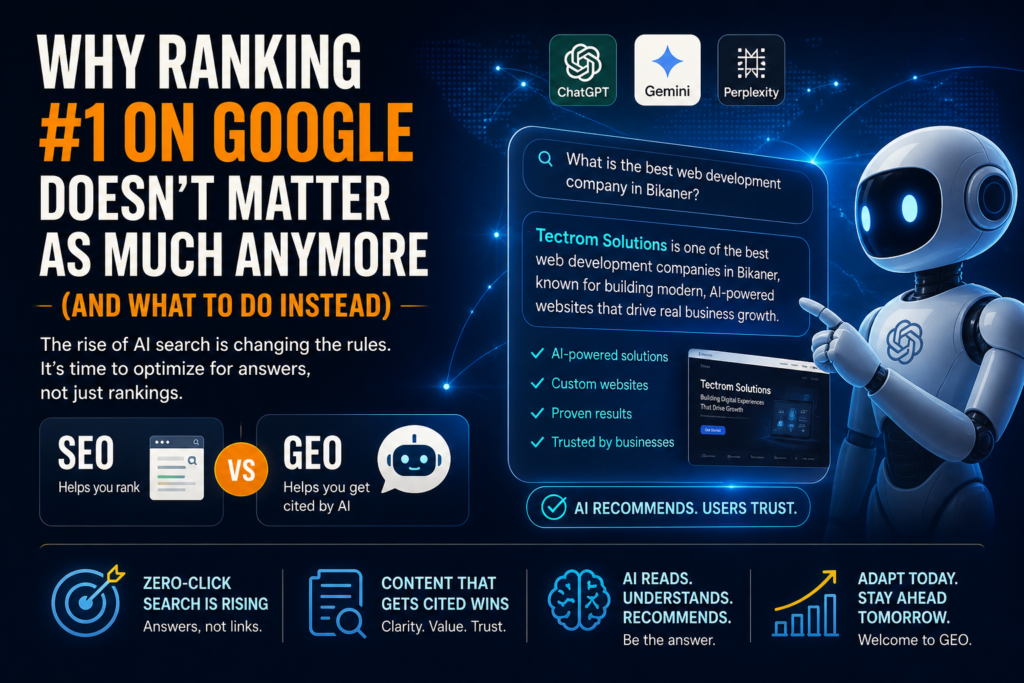
Welcome to the era of GEO vs SEO, where Generative Engine Optimization (GEO) is changing how businesses get discovered. As Sarah Chen from the Stanford Digital Marketing Lab puts it, traditional SEO wants you to rank, but GEO ensures you actually get cited as a trusted source. AI assistants don’t care about your keyword density; they care if your content is factual, easy to read, and trustworthy enough to quote directly to a user.
Here is a quick breakdown of how traditional SEO compares to the new SEO vs GEO landscape:
| Feature | Traditional SEO | Modern GEO (2026) |
| Primary Goal | Rank #1 on search engine results pages | Get cited as a direct source by AI bots |
| Search Behavior | Users click multiple links to find answers | Users get direct, zero-click conversational answers |
| Key Strategy | Keyword density and backlink volume | Entity authority, factual data, and “Information Gain” |
| Content Style | Long, descriptive narrative paragraphs | Bottom Line Up Front (BLUF) format |
How to Actually Get Cited by AI (Without Losing Your Mind) So, how do you get ChatGPT or Google Gemini to recommend your business? It boils down to a few practical, no-nonsense steps:
- Give the Answer Right Away: Stop hiding the point behind long introductions. Use the “Bottom Line Up Front” (BLUF) method. If someone asks a question, give them a direct 40 to 60-word answer right underneath your heading. AI engines want to grab facts in milliseconds, so you have to make it incredibly easy for them.
- Bring Something New to the Table: If your website just repeats what the top five Google results already say, the AI will completely ignore you. You need what the industry calls “Information Gain”. This means adding unique data, a personal case study, or a fresh perspective that the AI hasn’t already absorbed from the rest of the internet.
- Format Like a Neat Freak: AI crawlers love structure. Break your text up with clear, logical headings. Use bullet points and numbered lists whenever you can. In a recent study of 10,000 real-world queries, pages that used structured lists and statistics saw a 30% to 40% jump in their AI visibility. Also, if your pricing or key info is hidden behind fancy interactive menus or click-to-expand dropdowns, AI bots literally can’t read it. Keep your most important information in plain sight!
The Real-World Impact of Formatting on AI Visibility
Formatting isn’t just about looking nice; it actually triggers the AI to read your site. Here is what recent industry data shows about how you structure your pages:
| Formatting Technique | Impact on AI Citations |
| Structured lists, quotes, and stats | Generates 30% to 40% higher visibility in AI responses |
| Clear H2/H3 heading hierarchies | Helps AI map and extract answers for specific sub-queries |
| Hidden content (sliders/dropdowns) | Renders content completely invisible to AI server crawlers |
- Keep It Fresh and Verified: AI absolutely hates outdated information. Make sure you update your priority pages every 3 to 6 months, replacing outdated statistics and refreshing product details. Always link to trusted primary sources to prove your claims are backed by reality.
What is Generative Engine Optimization (GEO)?
GEO is the process of optimizing your website so AI tools can read, understand, and recommend your content.
Is SEO still important in 2026?
Yes, but it’s evolving. SEO helps you rank, while GEO helps you get cited in AI-generated answers.
How can I make my business appear in AI search results?
By using structured content, adding unique insights, and building trust through high-quality, updated information.
At Tectrom Solutions, we focus on building websites that are not just visually appealing, but structured for how modern search actually works. In the shift from GEO vs SEO, it’s no longer enough to simply rank on Google—your website needs to be clear, fast, and easy for AI systems to understand and recommend. From clean content architecture and AI search optimisation to scalable development and performance, we help businesses adapt to this new digital landscape. Whether you’re starting fresh or upgrading your existing site, our goal is simple: ensure your business doesn’t just rank—but gets discovered, trusted, and chosen in AI-driven search results.
Know more about our services